
Do Binaural Beats Work? A Medical Doctor Explains, and How to Use Them to Meditate
How binaural beats calm your brainwaves, what research shows, and a simple way to meditate with them, even if you have never meditated before.

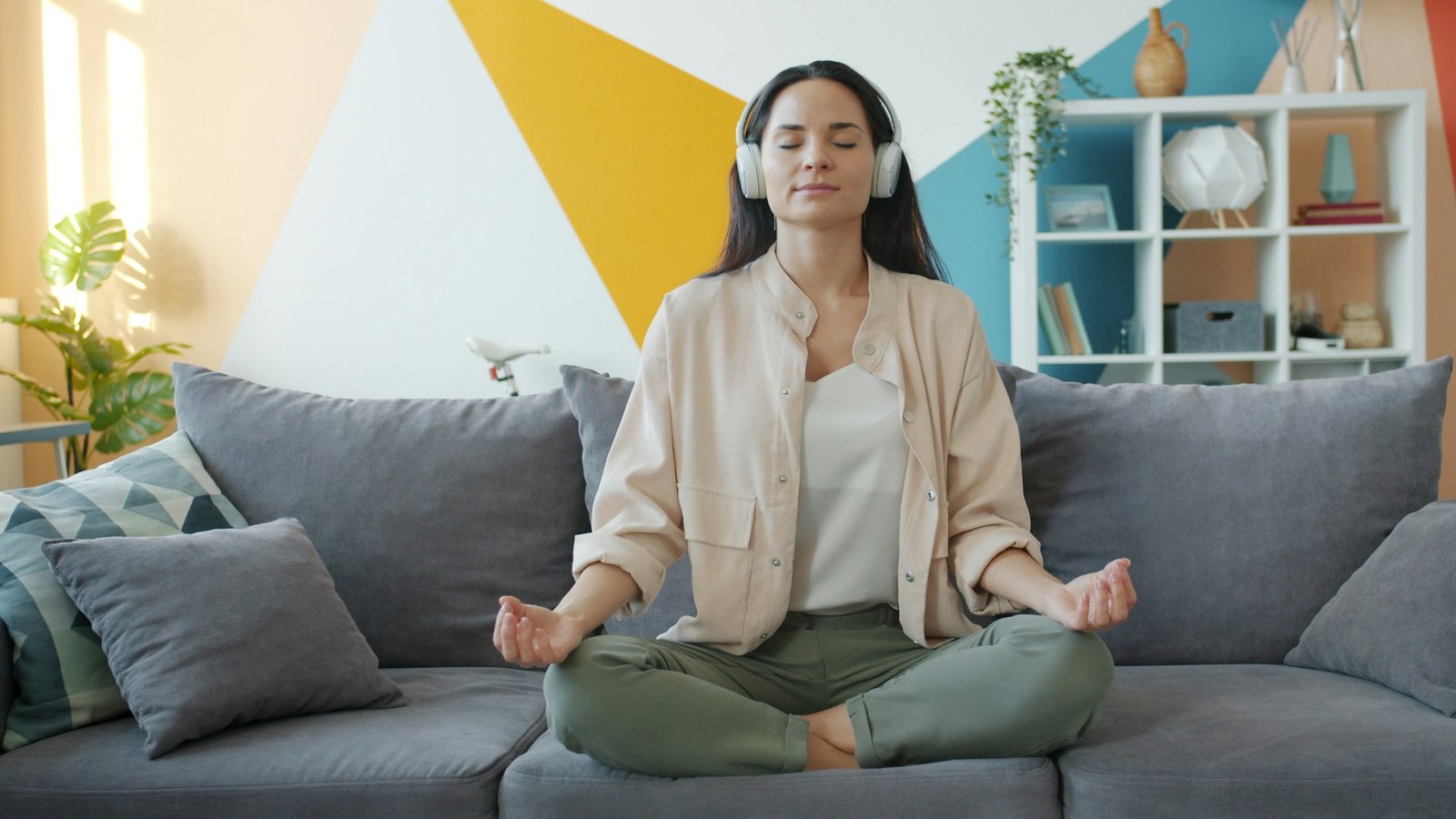
Do binaural beats work, and can they really help you meditate if you have never meditated before?
One question I get asked a lot in my sessions is: "Katharina, which meditation do you suggest?" For complete beginners, my answer has been the same for many years. Start with guided meditations that are recorded with binaural beats.
Most people cringe at the thought of sitting still and trying "not to think". They have tried, and they found it hard or boring. Many are so stressed that their body has forgotten how to relax. Binaural beats make the first step much easier.
Do they really work? Yes. In this article, I'll show you why: what binaural beats are, what research has found, what I have seen in more than 20 years of working with clients, and how to use them.
In short
Binaural beats are two slightly different tones, one in each ear. Your brain hears the difference between them as a third, pulsing beat and follows its rhythm into a calmer state. Research supports what I see in my practice: an analysis of 22 studies found a clear effect on anxiety, attention, memory and pain perception, and in a study before surgery, anxiety dropped by 26%. Binaural beats help you relax deeply and quickly, even if you have never meditated before. Use stereo headphones, keep the volume low and listen for 15 to 20 minutes, ideally with a guided voice.
What are binaural beats?
Binaural beats are a sound technology. Two tones with slightly different frequencies are played, one into each ear.
For example, your left ear hears a tone of 315 Hertz and your right ear hears a tone of 325 Hertz. Your brain calculates the difference, which is 10 Hertz, and you hear it as a soft, pulsing beat. This beat doesn't exist in the music. Your brain creates it.

Binaural beats only work with stereo headphones. Through a speaker, both ears hear both tones, and the effect is lost.
The idea behind them is called "brainwave entrainment": your brainwaves tend to follow a rhythm they hear. A beat of 10 Hertz is in the range of alpha waves, the state of calm relaxation.
Your brainwaves: from stress to deep relaxation
In every moment, your brain produces electrical activity in different rhythms. They are measured in Hertz (Hz) and roughly match how you feel:
- Gamma · above 38 HzA rare state of high focus, described in experienced meditators.
- High beta · 22 to 38 HzStress, worry, fear.
- Beta · 12 to 22 HzAttention, thinking and analyzing. You are probably in beta while you read this.
- Alpha · 8 to 12 HzCalm relaxation, daydreaming, light meditation.
- Theta · 4 to 8 HzThe state between awake and asleep. Deep meditation, visualization, intuition and creativity.
- Delta · 0.5 to 4 HzDeep, dreamless sleep and physical regeneration.
Experienced meditators have trained their mind to slip easily into alpha or theta. In these states, the critical mind that constantly judges and thinks about problems becomes quiet.
Most of us spend our days in beta, and when we are stressed, in high beta. That's why meditation can feel so hard in the beginning. You sit down, and your mind keeps running.
Do binaural beats work? What the research shows
Here is what research has found, in simple words:
Research on binaural beats is still growing. The results so far confirm what I have seen in my practice for many years: binaural beats help people relax, quickly and without effort.
What I see in my practice
I have used binaural beats in my guided meditations for many years. Here is what I have seen again and again:
People who "can't meditate" relax deeply. You don't have to stop your thoughts. You put on your headphones, listen to the voice and your body follows.
It helps when anxiety is high. When your mind is full of worst-case scenarios, sitting in silence feels almost impossible. In this case, I suggest starting with a binaural beats meditation rather than trying to observe your thoughts.
The voice takes you deeper. Binaural beats on their own relax you. A guiding voice on top of the music takes you even deeper and gives your mind something to follow.

How to meditate with binaural beats: a simple practice
Try it · about 20 minutes
Your first binaural beats meditation
- Use stereo headphones. In-ear or over-ear both work.
- Sit in a comfortable chair or lie down. You don't need to sit cross-legged on the floor.
- Start the meditation and set the volume low. You should still be able to hear your own breath.
- Close your eyes and follow the voice. If you notice your thoughts, simply come back to the voice and the music.
- Don't try to make something happen. Let the music do the work and allow yourself to relax.
- Listen for 15 to 20 minutes, ideally at the same time every day.
If you are a complete beginner, I suggest doing this for a few weeks. It helps your body learn to relax again. Later, you can also meditate in silence if you like.
A note from me as a medical doctorBinaural beats are low-risk at a comfortable volume. If you have epilepsy or a seizure disorder, please talk to your doctor before you use them. If you live with anxiety or depression, they can support you, but they don't replace treatment by your doctor or therapist.
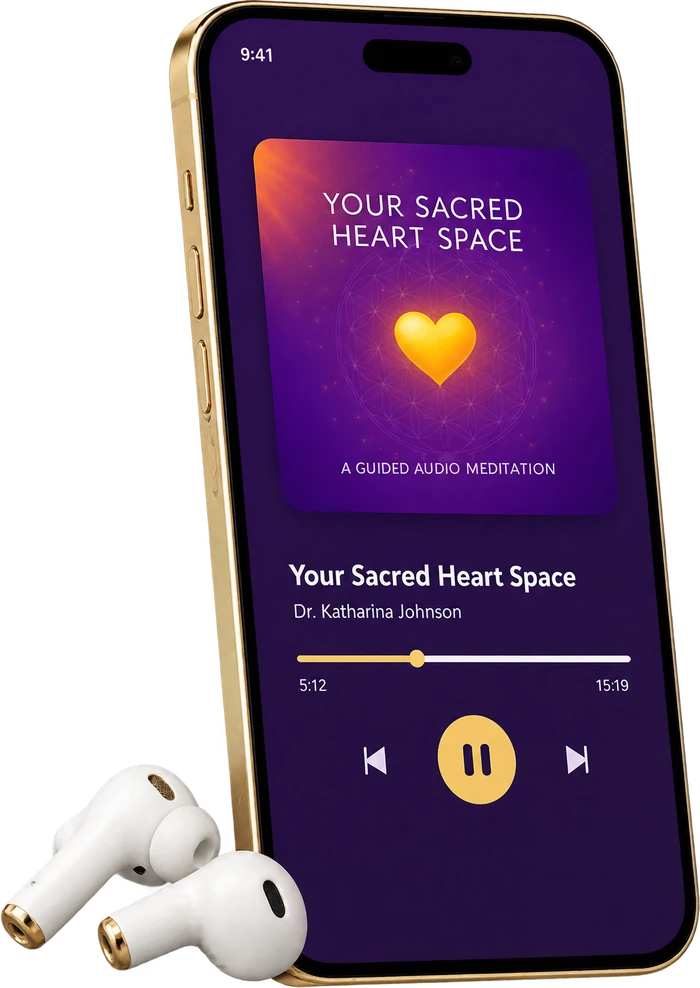
Receive "Your Sacred Heart Space", a guided heart meditation recorded with binaural beats. It helps you relax deeply, even if you have never meditated before.
Start the free course →Frequently asked questions about binaural beats
Do binaural beats really work?
Yes. Studies show a clear effect on anxiety, attention, memory and pain perception, and in my practice I have seen for many years how much easier they make it to relax and meditate.
Do you need headphones for binaural beats?
Yes. Each ear needs to hear its own tone, so the effect only works with stereo headphones. Through a speaker, both ears hear both tones.
Which binaural beat frequency is best for meditation?
For relaxation and meditation, alpha (around 8 to 12 Hz) and theta (around 4 to 8 Hz) are used most often. Theta is the deeper state, between awake and asleep.
How long does it take for binaural beats to work?
The effect is often immediate, and many people feel calmer after just one session. To help your body learn to relax again, I suggest listening for 15 to 20 minutes a day for a few weeks.
Are binaural beats safe?
For most people, yes, at a comfortable volume. If you have epilepsy or a seizure disorder, please ask your doctor first.
Can binaural beats replace meditation?
They are a wonderful way to start, especially if meditation feels hard for you. Over time, many people find that they can relax more easily without them, too.
What has your experience been with binaural beats? I would love to hear from you in the comments.
Much love,
Katharina
Medical doctor, trained in family medicine in Austria, medical intuitive and heart-based energy healer for more than 20 years, with over 1,000 clients worldwide. Host of The Energy Healing Podcast.
Sources: Garcia-Argibay M, Santed MA, Reales JM. Psychological Research 2019;83:357–372. Padmanabhan R, Hildreth AJ, Laws D. Anaesthesia 2005;60:874–877.
Energy healing supports, but does not replace, medical or psychological care. Please read my Medical and Legal Disclaimer.
Your next stepTry a binaural beats heart meditation for free
In my free course Awakening Your Heart's Power, you receive "Your Sacred Heart Space", a guided heart meditation recorded with binaural beats. It helps you relax deeply, even if you have never meditated before.
Start the free course →